

 ITA
ITA  ENG
ENG SPAN
SPAN FR
FR NL
NL GER
GER FI
FI

 ENG
ENG  ITA
ITA Maintenance KPIs: what they are, how to define and monitor them
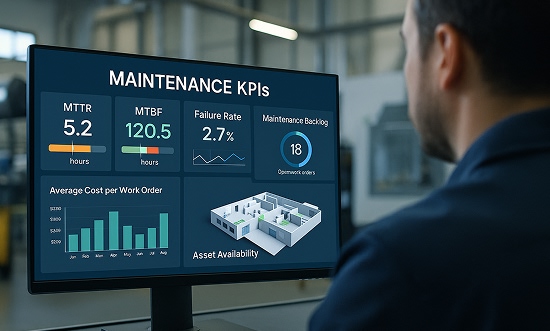
Maintenance KPIs: what they are and why they are fundamental
Maintenance KPIs (Key Performance Indicators) are key performance indicators used to measure the effectiveness and efficiency of maintenance activities. Unlike simple operational metrics, KPIs are closely linked to business objectives and allow for the objective evaluation of performance, costs, and asset reliability. Defining and monitoring the right KPIs allows for process optimization, waste reduction, and strategic decision-making based on data.
The advantages of monitoring maintenance KPIs
The adoption of maintenance KPIs offers numerous concrete benefits:
- Improvement of operational efficiency: quickly identify inefficiencies and bottlenecks.
- Cost reduction: monitor expenses and intervene promptly on anomalies.
- Increase in plant reliability: prevent failures and reduce machine downtime.
- Support for strategic decisions: objective data to plan investments and resources.
- Alignment with business objectives: ensure that maintenance contributes to business results.
The main maintenance KPIs to monitor
For effective management, it is essential to select and monitor the most relevant KPIs. Here are the main indicators used in the sector:
- MTBF (Mean Time Between Failures): measures the average time between one failure and the next. A high value indicates greater asset reliability.
- MTTR (Mean Time To Repair): indicates the average time needed to repair a failure. A low MTTR means fast and efficient interventions.
- Downtime: represents the total downtime of the systems. Reducing downtime is fundamental for productivity.
- Maintenance backlog: amount of pending work orders. A high backlog can signal organizational or resource shortages.
- Total maintenance cost: sum of all expenses related to interventions, useful for keeping the budget under control.
- Preventive vs. corrective maintenance percentage: indicates the proportion between scheduled and reactive interventions. A high percentage of preventive maintenance reduces the risk of sudden failures.
- OEE (Overall Equipment Effectiveness): measures the overall effectiveness of the systems considering availability, performance, and quality.
- Schedule compliance: percentage of work orders executed within the planned timeframe. A high value reflects good planning.
- Mean Down Time (MDT): average machine downtime for each failure, useful for evaluating the impact of interruptions.
- Average cost per intervention: allows for analyzing the economic efficiency of maintenance activities.
Monitoring these KPIs allows for identifying areas for improvement, preventing critical issues, and ensuring operational continuity.
How to define maintenance KPIs
KPI definition must be a structured and shared process. Follow these steps to choose the most effective indicators:
- Align KPIs with business goals: each indicator must respond to a real business need.
- Involve relevant departments: collaboration between maintenance, production, and management is essential.
- Select a limited set of KPIs: focus on 6-10 truly significant indicators to avoid dispersion.
- Clearly define each KPI: establish calculation formulas, data sources, and shared reference thresholds.
- Periodically review KPIs: update indicators based on the evolution of goals and processes.
How to monitor and analyze maintenance KPIs
To obtain concrete results, it is essential to monitor KPIs systematically and analyze the collected data. Here are the best practices:
- Use digital dashboards and scorecards: visualize the progress of KPIs in real-time with graphs, traffic lights, and trends.
- Adopt CMMS software: centralize data collection, automate reports, and facilitate historical analysis.
- Integrate data from multiple sources: connect BIM, IoT, BMS systems, and sensors for a complete and updated view.
- Make data accessible via mobile: allow the team to monitor KPIs wherever they are.
- Organize periodic retrospectives: analyze results, identify anomalies, and update maintenance strategies.
Constant monitoring allows for preventing failures, optimizing resources, and improving service quality.
Reference standards and best practices
To ensure consistency and reliability in KPI definition, it is advisable to follow industry standards such as UNI EN 15341:2022, which provides guidelines for the selection and calculation of maintenance indicators. Complying with recognized standards helps compare performance over time and with other entities in the sector.
Advanced maintenance KPI management with UTwin
The UTwin platform allows for centralizing, monitoring, and analyzing maintenance KPIs in a simple and integrated way. Main advantages include:
- Customizable dashboards to visualize the most relevant KPIs in real-time.
- Integration with BIM, IoT, BMS systems, and sensors for automatic and reliable data collection.
- Advanced reporting for historical analysis and comparisons between different periods or assets.
- Mobile access to monitor performance anywhere and at any time.
- Ease of use and rapid onboarding to involve the whole team in data-driven maintenance management.
With UTwin, maintenance KPI management becomes a strategic tool to improve efficiency and achieve business goals.
Managing maintenance with KPIs: the key to success
Adopting a maintenance KPI system means transforming data into value, optimizing processes, and ensuring maximum asset reliability. Want to discover how to improve maintenance management in your company? Learn more about the topic or request an informative demo to see the benefits of a data-driven approach.


Informative Material